📚 Botanical Overview
Taxonomic Classification
Crocosmia belongs to the Iridaceae family, subfamily Crocoideae, tribe Ixieae.
- Scientific name: Crocosmia (formerly Montbretia)
- Synonyms: Crocosmia aurea var. pauciflora, Crocosmia pottsii, Tritonia crocosmiflora
- Common name: Crocosmia, Montbretia, "Garden Flame"
- Geographic origin: South Africa (Cape regions, Natal, Transvaal)
Morphological Characteristics
Perennial rhizomatous plant, forming dense clumps.
- Leaves: Linear, sword-shaped, dark green to blue-green, upright, reaching 60-90 cm in length
- Rhizomes: Tuberous, horizontal, producing stolons
- Flower stems: Upright, unbranched, bearing 4-10 flowers
- Flowers: Tubular, funnel-shaped, arranged in unilateral spikes
- Colors: Scarlet red, bright orange, golden yellow, sometimes bicolored
- Size: 4-8 cm in diameter per flower
🌍 History and Discovery
African Origins
Crocosmia is native to the mountainous regions and grasslands of South Africa.
- Discovered by European botanists in the early 19th century
- Introduced to Europe in 1847 by Scottish botanist John Lindley
- Named "Crocosmia" from the Greek "krokos" (saffron) and "osme" (smell), referring to the saffron-like scent emitted by dried flowers
- The name "Montbretia" comes from French naturalist Émile Montbret (1785-1859)
Adaptation and Naturalization
Crocosmia has perfectly adapted to European temperate climates.
- Naturalized in Western Europe (France, United Kingdom, Ireland)
- Considered an invasive plant in certain regions (Ireland, United Kingdom)
- Ability to colonize disturbed habitats thanks to its prolific rhizomes
- Historical use as an ornamental plant since the mid-19th century
🌱 Biology and Physiology
Life Cycle
Crocosmia is a rhizomatous geophyte, with a marked vegetative cycle.
- Dormancy period: Autumn-winter (November to March in the northern hemisphere)
- Vegetative resumption: Spring (March-April)
- Flowering: Summer (July to September depending on climate)
- Foliage growth: Spring-summer (April to August)
- Senescence: Autumn (October-November)
Reproduction
Natural and artificial propagation.
- Sexual reproduction: By seed (rarely used in cultivation, significant genetic variability)
- Asexual reproduction: Rhizome division (most common method)
- Spreading capacity: Rhizomes produce stolons that root at a distance
- Germination rate: Variable depending on species (50-80% for cultivated hybrids)
Photosynthesis and Metabolism
C3 plant with good adaptation to intense light conditions.
- Leaves: Isobilateral structure (no differentiation between upper and lower surface)
- Stomata: Present on both sides of the leaves
- Reserves: Rhizomes storing starch and sugars for winter dormancy
- Light requirement: Full sun to partial shade (6-8 hours/day optimal)
🌿 Cultivation and Maintenance
Optimal Growing Conditions
Climate
- Hardiness: USDA zones 6-9 (depending on variety)
- Minimum temperature: -10°C to -15°C (depending on winter protection)
- Climate preference: Temperate oceanic or Mediterranean
- Drought tolerance: Moderate to good (especially in summer)
- Frost sensitivity: Rhizomes sensitive to prolonged freezing
Soil
- Soil type: Well-draining, light, rich in organic matter
- Optimal pH: Neutral to slightly acidic (pH 6.0-7.0)
- Texture: Sandy to loamy (avoid compact clays)
- Drainage: Excellent drainage essential (risk of rhizome rot)
- Recommended amendments: Well-decomposed compost, coarse sand, perlite
Exposure
- Full sun: Ideal (6-8 hours/day)
- Partial shade: Tolerated (especially in hot regions)
- Shade tolerance: Low (reduced flowering)
- Optimal orientation: South or west
Planting
Planting Period
- Ideal period: Spring (March-April) or autumn (September-October)
- Avoid: Planting during frost or extreme heat
- Time to flowering: 1 year after planting (flowering from the 2nd year)
Planting Technique
- Soil preparation: Deep tilling (30 cm), incorporation of compost
- Depth: 10-15 cm (rhizomes placed horizontally)
- Spacing: 30-50 cm between plants (depending on variety vigor)
- Mulching: Recommended (straw, wood chips) to protect rhizomes in winter
- Initial watering: Abundant after planting
Garden Companions
- Companions: Achillea, Echinacea, Rudbeckia, Hemerocallis
- Mass plantings: In groups of 5-7 plants for a spectacular effect
- Borders: In the front row to enjoy the flowers
- Containers: Possible in deep pots (40 cm minimum)
Routine Maintenance
Watering
- Water needs: Moderate (1-2 times per week in summer)
- Critical period: Flowering and active growth
- Method: Water at the base (avoid wetting the foliage)
- Drainage: Always check before watering
Fertilization
- Fertilizer type: Balanced (10-10-10) or organic (compost, decomposed manure)
- Period: Spring (start of vegetative growth) and after flowering
- Dosage: 50-100 g/m² or 1 handful per plant
- Frequency: 2-3 times per year
Pruning and Care
- Dead leaves: Remove after senescence (November-December)
- Flower stems: Cut back after flowering to prevent draining the rhizomes
- Winter protection: Thick mulch (20 cm) in cold regions
- Wind protection: Stake if exposed to wind
🌸 Propagation and Cuttings
Rhizome Division
The most effective and recommended method for gardeners.
- Period: Spring (March-April) or early autumn (September)
- Equipment: Sharp knife, gloves, planting tray
- Technique: Divide rhizomes into 5-10 cm sections with at least 1-2 buds
- Preparation: Allow sections to dry for 24 hours before replanting
- Success rate: 90-100% under optimal conditions
- Number of divisions: 1 plant can yield 5-10 new plants
Seed Sowing
Less common method but useful for creating new hybrids.
- Period: Spring (March-April) under heated cover
- Preparation: Seed scarification (rubbing with sandpaper)
- Substrate: Soil/sand mix (50/50)
- Temperature: 18-22°C for germination
- Germination duration: 3-6 weeks
- Flowering: 2-3 years after sowing
Floral Stem Cuttings
Alternative method for rapid propagation.
- Period: Summer (June-July) during flowering
- Technique: Take a flower stem with a piece of rhizome
- Rooting: Place in a pot with moist substrate
- Conditions: Light shade, constant humidity
- Success rate: 70-80%
🌈 Varieties and Cultivars
Main Cultivated Varieties
'Lucifer'
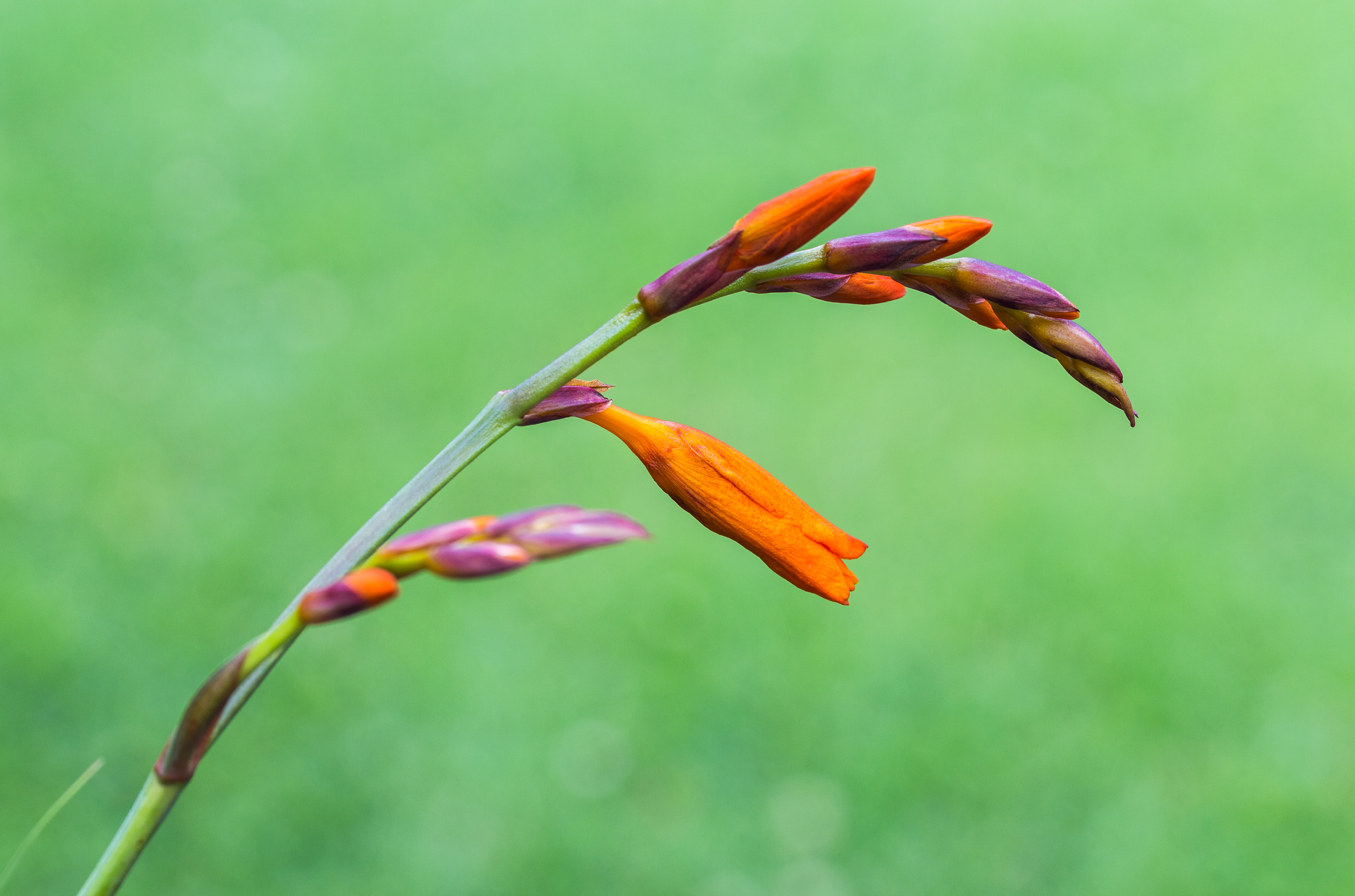
- Height: 90-120 cm
- Flowers: Vivid scarlet red, very bright
- Flowering: July to September
- Hardiness: -12°C
- Distinctive feature: Most cold-resistant variety
- Use: Mass plantings, bouquets, cut flowers
'Emberglow'

- Height: 60-90 cm
- Flowers: Intense orange-red
- Flowering: July to August
- Hardiness: -10°C
- Distinctive feature: Purple foliage at the start of the season
- Use: Borders, colorful mass plantings
'John Boots'

- Height: 70-100 cm
- Flowers: Bright golden yellow
- Flowering: July to September
- Hardiness: -10°C
- Distinctive feature: Most luminous variety
- Use: Sunny mass plantings, bouquets
'George Davidson'

- Height: 80-110 cm
- Flowers: Golden orange, very fragrant
- Flowering: July to August
- Hardiness: -11°C
- Distinctive feature: Pronounced saffron aroma
- Use: Mass plantings, aromatic gardens
'Solfaterre'

- Height: 60-80 cm
- Flowers: Pale yellow, almost cream
- Flowering: August to September
- Hardiness: -9°C
- Distinctive feature: Palest variety
- Use: Light mass plantings, zen gardens
'Mistral'

- Height: 50-70 cm
- Flowers: Brick red, very graphic
- Flowering: July to August
- Hardiness: -10°C
- Distinctive feature: Compact habit
- Use: Borders, pots, rock gardens
'Emily McKenzie'

- Height: 70-90 cm
- Flowers: Bright orange with darker center
- Flowering: July to September
- Hardiness: -10°C
- Distinctive feature: Very double flowers
- Use: Spectacular mass plantings
'Carmin Brilliant'

- Height: 80-100 cm
- Flowers: Deep carmine red
- Flowering: August to September
- Hardiness: -11°C
- Distinctive feature: Highly disease-resistant
- Use: Perennial mass plantings
'Babylon'

- Height: 100-130 cm
- Flowers: Orange-red, very tall
- Flowering: July to September
- Hardiness: -12°C
- Distinctive feature: Tallest variety
- Use: Back of mass plantings, low hedges
⚠️ Diseases, Pests, and Common Problems
Fungal Diseases
Rhizome Rot
The most common and destructive disease.
- Symptoms: Soft, blackened rhizomes, rotting smell
- Causes: Excess moisture, poorly drained soil
- Critical period: Autumn-winter (dormancy period)
- Preventive treatment: Soil drainage, aerated mulching
- Curative treatment: Removal of affected parts, fungicide treatment (copper sulfate)
- Resistant varieties: 'Lucifer', 'Carmin Brilliant'
Gray Mold (Botrytis)
Secondary disease favored by humidity.
- Symptoms: Brown spots on leaves, gray mold
- Causes: Excessive humidity, poor air circulation
- Treatment: Removal of affected parts, systemic fungicide
- Prevention: Avoid wetting foliage, sufficient planting spacing
Leaf Spot
Cosmetic but minor disease.
- Symptoms: Brown or yellow spots on leaves
- Causes: Fungi (Septoria, Alternaria)
- Treatment: Removal of affected leaves, fungicide
- Prevention: Crop rotation, garden hygiene
Anthracnose
- Symptoms: Necrotic lesions on leaves and stems
- Causes: Colletotrichum spp.
- Treatment: Fungicide, removal of affected parts
- Prevention: Mulching, avoid standing water
Pests
Slugs and Snails
Main pests of young shoots.
- Damage: Devoured leaves, cut young shoots
- Critical period: Spring (vegetative resumption)
- Treatment: Beer traps, ash barriers
- Prevention: Mulching with crushed eggshells
- Sensitive varieties: All, especially young plants
Thrips
Small sap-sucking insects.
- Symptoms: Deformed, silvered leaves, presence of small black dots
- Period: Summer (July-August)
- Treatment: Systemic insecticide, natural predators (ladybugs)
- Prevention: Black soap spray
Aphids
Colonies on young shoots and flower buds.
- Symptoms: Curled leaves, honeydew, sooty mold
- Treatment: Water jet, natural insecticide (potassium soap)
- Prevention: Companion plants (marigolds, nasturtiums)
Red Spider Mites
Microscopic mites in dry conditions.
- Symptoms: Yellowed leaves, fine webs
- Treatment: Increased humidity, acaricide
- Prevention: Regular misting
Physiological Problems
Lack of Flowering
- Causes: Lack of sun, soil too rich in nitrogen, too frequent division
- Solutions: Full sun exposure, balanced fertilization, division every 3-4 years
Yellow Leaves
- Causes: Excess water, iron deficiency, fungal disease
- Solutions: Check drainage, iron chelate application, fungicide treatment
Rhizomes Rising to the Surface
- Causes: Soil too compact, division too old
- Solutions: Lightly hill up soil, divide rhizomes
Premature Leaf Drying
- Causes: Water stress, disease, normal senescence
- Solutions: Regular watering, disease check
🛒 Commercial Aspects and Where to Find Crocosmia
Varieties Available on the Market
Traditional Garden Centers
- Common varieties: 'Lucifer', 'John Boots', 'Emberglow'
- Average price: €3-8 per rhizome
- Selling period: Spring (March-May)
- Advantages: Planting advice, establishment guarantee
- Disadvantages: Limited selection, sometimes high prices
Specialized Nurseries
- Rare varieties: 'George Davidson', 'Solfaterre', 'Emily McKenzie'
- Average price: €5-15 per rhizome
- Selling period: Year-round (by order)
- Advantages: Wide selection, expert advice
- Disadvantages: Delivery time, higher prices
Online (E-commerce)
- Recommended sites: Bakker, Willemse, Truffaut, Plantes pour tous
- Varieties: Wide selection, new hybrids
- Average price: €2-10 per rhizome (+ shipping)
- Advantages: Home delivery, promotions
- Disadvantages: Risk of dry rhizomes on arrival
Purchasing Tips
- Check rhizome condition: Firm, with no mold or soft parts
- Choose medium-sized rhizomes: 5-10 cm long with 2-3 buds
- Prioritize certified rhizomes: Disease-free, guaranteed varieties
- Avoid overly dry or shriveled rhizomes: Risk of poor establishment
- Buy early in the season: Best availability and prices
- Check hardiness: Match to your climate zone (USDA 6-9)
Price and Return on Investment
Initial Cost
- Rhizome only: €2-15
- 1L pot: €8-20
- 3L pot: €15-35
- Shipping: €5-15 depending on weight
Return on Investment
- Flowering from the 2nd year
- Longevity: 10-15 years without division
- Natural propagation: 5-10 new plants per plant in 3 years
- Ornamental value: Very high (spectacular mass plantings)
🎯 Uses and Applications
In the Garden
Landscaping
- Mass plantings: In groups of 5-7 plants for a spectacular effect
- Borders: In the front row to enjoy the vivid colors
- Rock garden: Dwarf varieties ('Mistral')
- Cottage gardens: Heritage varieties ('George Davidson')
- Contemporary gardens: Graphic varieties ('Lucifer')
Successful Combinations
- With ornamental grasses: Stipa, Miscanthus
- With perennials: Rudbeckia, Echinacea, Helenium
- With annuals: Cosmos, Zinnia, Dahlia
- In containers: Compact varieties ('Mistral', 'Solfaterre')
Other Uses
Cut Flowers
- Vase life: 7-10 days
- Technique: Cut early in the morning, change water daily
- Recommended varieties: 'Lucifer', 'Emberglow', 'John Boots'
- Tip: Add a little sugar to the water to prolong vase life
Aromatic Uses
- Dried flowers: Pronounced saffron scent
- Culinary use: Edible petals (decoration)
- Infusions: Dried flowers for aromatic beverages
- Potpourri: Dried flowers to fragrance the home
Traditional Medicinal Uses
- In South Africa: Used in traditional medicine for digestive troubles
- Properties: Anti-inflammatory, antispasmodic (limited studies)
- Precautions: Not recommended without medical advice (risk of toxicity)
Ecology and Biodiversity
- Attracts pollinators: Bees, butterflies
- Nectar: Food source for foraging insects
- Habitat: Shelter for small insects
- Pioneer plant: Colonizes disturbed habitats
🔬 Research and Innovations
Genetic Improvement
Modern hybrids offer improved characteristics.
- Objectives: Cold resistance, longer flowering, new colors
- Recent varieties: 'Babylon', 'Carmin Brilliant', 'Emily McKenzie'
- Techniques: Controlled hybridization, mass selection
- Prospects: Drought-resistant Crocosmia, new colors
Agronomic Research
- Climate adaptation: Studies on hardiness in cold zones
- Cultivation techniques: Optimization of rhizome division
- Crop protection: Biological control of diseases
- Biodiversity: Conservation of wild species in South Africa
📖 Glossary and Resources
Glossary
- Geophyte: Perennial plant whose storage organs are underground
- Rhizome: Horizontal underground stem producing roots and aerial stems
- Stolon: Aerial or underground stem producing new plants
- Dormancy: Period of vegetative rest in winter
- Fungicide: Chemical or natural product against fungal diseases
- Hardiness: Ability to withstand winter cold
Useful Resources
- Books: "Les Vivaces" by Roger Phillips, "Le Grand Livre des bulbes" by Andrew Mikolajski
- Websites: Wikipedia (Crocosmia), AuJardin.info, Plantes pour tous
- Associations: Société Nationale d'Horticulture de France, Royal Horticultural Society
- Magazines: "Rustica", "Le Journal des Plantes", "Pépinières"