Introduction: An iconic genus of tropical forests
Systematic position and ecological importance
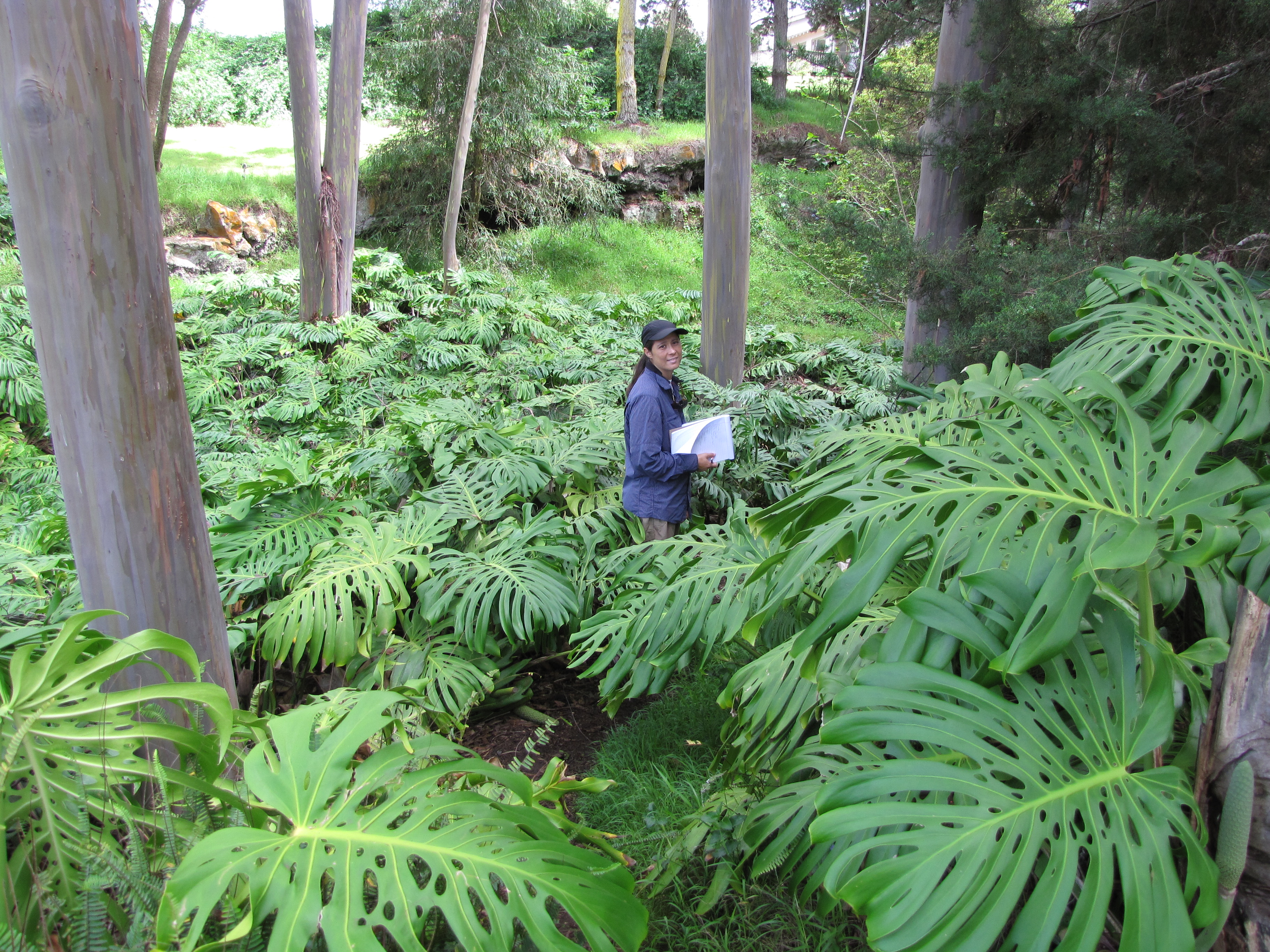
The genus Monstera Adans. (1763), belonging to the family Araceae, represents an exceptional model for understanding the adaptations of tropical plants to shaded environments. These plants, native to Neotropical rainforests (from Mexico to Argentina), have developed remarkable morphological, anatomical, and physiological strategies to optimise their survival in the dense canopy. The Monstera perfectly illustrate the concept of convergent evolution: their fenestrated leaves, although produced by different lineages within the Araceae, respond to the same selective pressure – to maximise light capture in an understory where only 1 to 5% of the light reaches the ground.
In horticulture, these adaptations have made Monstera deliciosa one of the most popular indoor plants in the world, with over 10 million specimens sold annually in Europe and North America.
Introductory sources
- Cusimano et al. (2011) - "Phylogeny and evolution of foliar specialization in Monsteroideae" (American Journal of Botany)
- Plants of the World Online - Monstera taxonomy
- Boyce & Croat (2012) - "A revision of Monstera (Araceae)"
Taxonomy and species diversity
Modern classification and model species

Systematic position
A central place within the Monsteroideae
The genus Monstera belongs to the subfamily Monsteroideae, tribe of Monstereae, characterised by unique morphological traits:
- A unique leaf morphology with fenestrations and perforations
- Inflorescences in spadices with coloured and thermogenic spathe
- Specialised pollination strategies involving beetles (Scarabaeidae)
- Edible syncarpous fruits (in some species)
The Monstereae tribe comprises approximately 12 genera and 300 species, several of which are popular houseplants such as Epipremnum aureum or Rhaphidophora tetrasperma, often confused with Monstera in horticulture.
Main species and their characteristics
Morphological, ecological, and horticultural diversity
- Monstera deliciosa Liebm. (1849) - The model species with edible fruits and characteristic fenestrated leaves
- Monstera adansonii Schott (1830) - Smaller fenestrations, fast growth, ideal for terrariums
- Monstera obliqua Miq. (1844) - Extremely perforated leaves (up to 80%), rare in cultivation
- Monstera pinnatipartita Schott (1858) - Deeply lobed leaves, strict epiphyte of Andean forests
- Monstera standleyana G.S.Bunting (1964) - Narrow and elongated leaves, monopodial growth
Recent phylogenetic studies (Cusimano et al., 2011; Haigh et al., 2018) confirm that Monstera is a monophyletic genus, with rapid diversification linked to the evolution of Neotropical forests approximately 10-15 million years ago (Miocene).
Detailed classification
- Boyce et al. (2014) - "A revision of Monstera (Araceae)" (Blumea)
- Haigh et al. (2018) - "Phylogenetic relationships in Monstereae" (Journal of Systematics and Evolution)
Morphology and Anatomy: Key Adaptations
From fenestrated leaves to aerial roots, including reproductive strategies
Vegetative Apparatus: An Optimised Architecture for the Tropical Forest
Leaves, stems, and roots adapted to the constraints of the understory
Fenestrated Leaves: An Optimal Evolutionary Compromise
Theory of light optimisation and mechanical resistance
Leaf perforations, characteristic of the genus Monstera, result from an adaptation to two major constraints:
- Maximise the capture of diffuse light in the forest understory (where light intensity is 100 times lower than in the canopy)
- Reduce the leaf surface exposed to strong winds and herbivores (particularly insects and folivorous mammals)
- Optimise mechanical resistance by reducing tension stresses on the veins
“The windows allow for a uniform distribution of light on the chloroplasts, increasing photosynthetic efficiency by 15 to 20% under low light conditions, while reducing leaf mass by 30% compared to an equivalent solid leaf” — Haberlandt (1914), "Physiological Plant Anatomy"
The degree of fenestration varies considerably depending on the species: M. obliqua has up to 80% perforations, while M. deliciosa has approximately 30-40%. This variation is correlated with humidity and forest density.
Aerial Roots: Structure, Function, and Ecology
Anatomical innovation for water absorption and fixation
The aerial roots of Monstera (particularly developed in M. deliciosa) have a unique anatomy among vascular plants:
- A velamen (multilaminar spongy tissue) for atmospheric water absorption and protection against desiccation
- Specialised absorbent hairs (trichomes) for hydration and nutrient absorption
- A lignified structure with air channels for mechanical fixation to supports
- Tannins in the outer tissues that give them their characteristic white colour and protect them from UV radiation
Contrary to a very widespread misconception, the aerial roots of Monstera are NOT organs of respiration. They are specialised for water and nutrient absorption, and their white colour is due to light reflection by the velamen, not a respiratory function.
 ## Reproductive Apparatus: Pollination and Fruiting Strategies
Complex inflorescences and attractive fruits for seed dispersal
The Flower: A Thermogenic Spadix
Structure, function, and specialised pollination
Like all Araceae, Monstera has a characteristic inflorescence in the form of a spadix surrounded by a coloured spathe. This structure, although inconspicuous in cultivation, plays a crucial role in reproduction:
- The spathe can reach 30-40 cm in length in M. deliciosa, with colours ranging from creamy white to yellowish-green
- The spadix produces volatile compounds (esters, alcohols, aldehydes) to attract specific pollinators
- Thermogenesis (heat production) of the spadix, which can reach 10-15°C above ambient temperature, promotes the diffusion of odours and attracts insects
- The flowering duration varies from 2 to 7 days depending on the species
The main pollinators are beetles of the family Scarabaeidae (subfamily Cetoniinae), attracted by the odours of fermentation and fungus.
The Fruit: An Edible and Attractive Syncarp
Structure, maturation, and dispersal
The fruits of Monstera are syncarps (fruits composed of several fused flowers), characteristic of the Araceae. In M. deliciosa, they have remarkable features:
- Length: 20-30 cm, diameter: 3-5 cm
- Colour: Green at the beginning, then yellow at maturity
- Taste: A mixture of banana, pineapple, and mango (hence its common name "Swiss cheese fruit")
- Composition: Rich in vitamins A and C, fibre, and oxalic acid (to be consumed ripe only)
- Dispersal: Mature fruits fall to the ground and are consumed by mammals (tapirs, coatis) who disperse the seeds
The fruits of Monstera should only be consumed when they are completely ripe (yellow and slightly soft). When immature, they contain crystals of calcium oxalate that cause severe oral irritation.
Detailed Reproductive Anatomy
- Skubatz et al. (2015) - "Thermogenic spadix of Monstera deliciosa" (Bioresource Technology)
- Croat (1982) - "Monstera (Araceae) of Mexico and Central America" (Annals of the Missouri Botanical Garden)
Ecology and Adaptations: Surviving in the Tropical Canopy
Adaptation strategies to the constraints of the forest environment

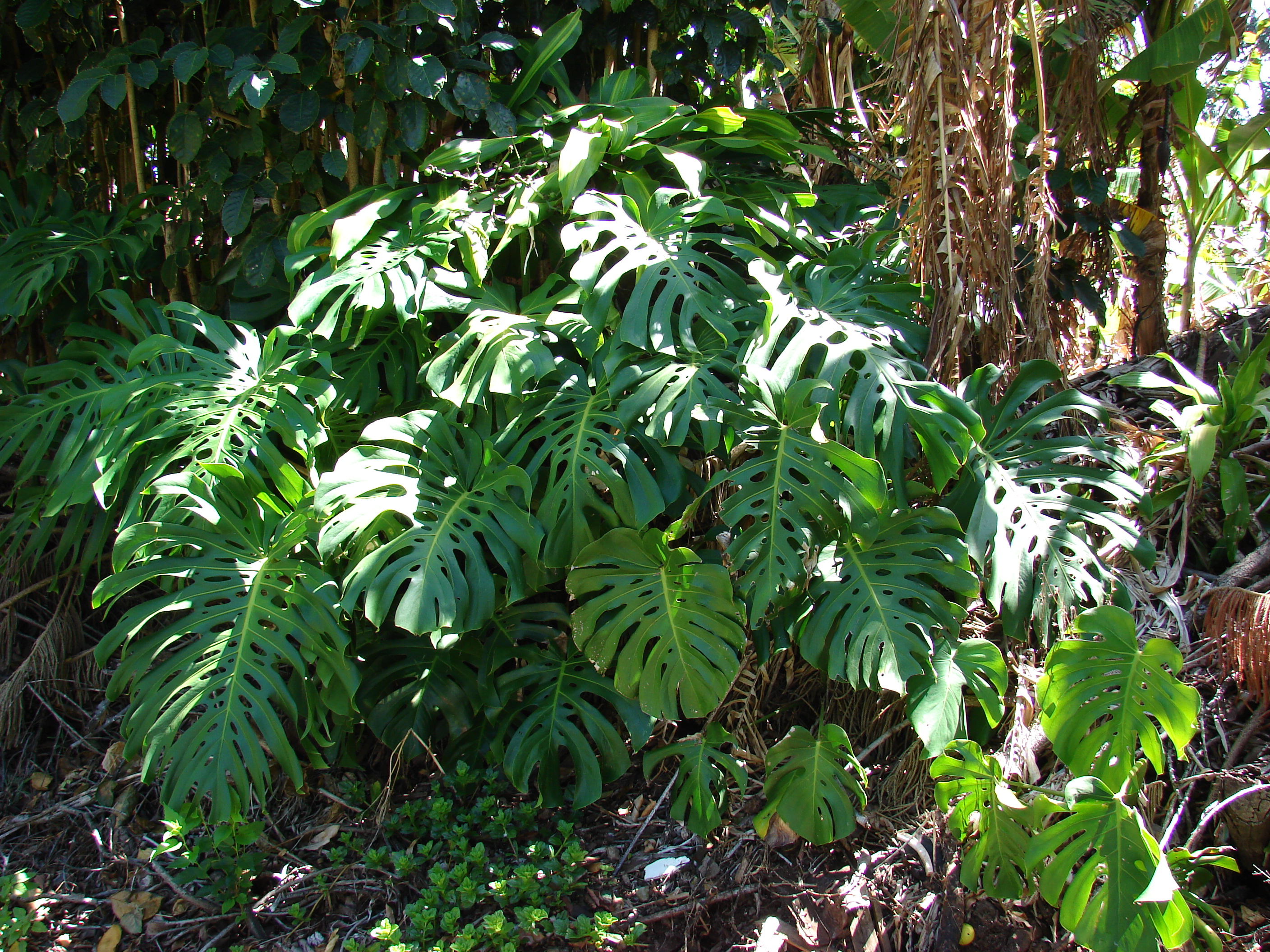
Adaptation strategies to the shaded understory
Optimising photosynthesis and resistance to constraints
Leaf adaptations
Fenestration as a solution to shading
In humid tropical forests, light is a major limiting factor. Monstera have developed several adaptations to cope with this:
- Leaf fenestrations: Reducing leaf surface area while maintaining an efficient photosynthetic surface
- Transparent epidermis: Some species have epidermal cells that allow light to pass through to the lower layers
- Parallel veins: Organisation of veins that facilitates the circulation of water and nutrients to the fenestrated areas
- Accessory pigments: Presence of carotenoids that capture blue and green wavelengths less absorbed by chlorophyll
Spectroscopic imaging studies (Zotz, 2013) have shown that fenestrated leaves of Monstera capture up to 35% more light than solid leaves of equivalent size under the same conditions.
Root adaptations
A symbiosis with the atmosphere and the substrate
The aerial roots of Monstera play a crucial role in their ecology:
- Absorption of atmospheric water: The velamen allows absorption of moisture from the air (up to 20% of the plant's dry weight)
- Mechanical fixation: The roots anchor firmly to host trees, allowing for vertical growth
- Absorption of nutrients: Some aerial roots develop fungal symbionts (mycorrhizae) to absorb nutrients from the aerial substrate (bark, decomposing leaves)
- Protection against herbivores: The tough texture and tannins make the roots unpalatable
Reproduction and dispersal strategies
From pollination to germination
The Monstera have developed highly specialised reproductive strategies to maximise their chances of survival in a competitive environment:
Pollination
A mutualistic relationship with beetles
- Chemical attraction: Production of specific volatile compounds (ethyl esters, alcohols) mimicking the odours of fermented fruits or fungi
- Thermogenesis: Production of heat to diffuse odours and attract pollinators over long distances
- Flowering duration: Synchronisation with the availability of pollinators (often linked to rainy seasons)
- Spadix structure: Shape and texture optimised to retain insects during pollination
Ecological chemical studies (Kite et al., 1998) have identified more than 50 different volatile compounds produced by the spadix of Monstera deliciosa, some of which are specific to this species.
Seed dispersal
A frugivore strategy
The fruits of Monstera are adapted for dispersal by mammals:
- Contrast colour: Changes from green to yellow at maturity to signal edibility
- Soft texture: Facilitates consumption by animals
- Attractive taste: Sweet-sour mixture that attracts frugivores
- Durable seeds: Protective coating against partial digestion
Seed germination of Monstera is very slow (several months) and requires specific conditions of filtered light and high humidity. In cultivation, vegetative propagation (stem cuttings or root division) is preferred.
Ecology of Monstera: Key studies
- Zotz (2013) - "The Biology of Epiphytes" (Advances in Botanical Research)
- Croat (1988) - "A revision of the genus Monstera (Araceae)" (Annals of the Missouri Botanical Garden)
- Kite et al. (1998) - "Chemistry of pollinator-attracting volatiles from inflorescences" (Phytochemistry)
Horticultural Applications and Conservation Issues
From Houseplants to Ecosystem Protection
Horticulture: A Houseplant with Many Advantages
Adaptations to Indoor Cultivation and Horticultural Varieties
Optimal Growing Conditions
Replicating a Tropical Environment Indoors
Monstera are relatively easy to grow indoors, provided their ecological needs are met:
- Light: Bright, indirect light (avoid direct sunlight, which can scorch the leaves)
- Temperature: Ideally 18-27°C (minimum 13°C, susceptible to frost)
- Humidity: 60-80% (aerial roots appreciate regular misting)
- Substrate: Well-draining mix (potting soil + perlite + pine bark)
- Watering: Allow the soil to dry slightly between waterings (avoid overwatering)
- Fertilizer: Diluted liquid fertilizer every 2-4 weeks during the growing season
Monstera are climbing plants in their natural habitat. In cultivation, they require support (moss pole, trellis) to replicate their natural growth habit.
Horticultural Varieties and Popular Cultivars
Adaptations for All Tastes
Several horticultural cultivars and varieties of Monstera are available in the ornamental horticulture industry:
- 'Albo Variegata': Leaves variegated with creamy white (rare and expensive mutation)
- 'Thai Constellation': Leaves with creamy white spots (stable cultivar)
- 'Variegata': Leaves with white or yellow patches (unstable, may revert to green)
- 'Minima': Dwarf form of M. adansonii with smaller leaves
- 'Esqueleto': Very fenestrated variant of M. adansonii
Variegated varieties ('Albo Variegata', 'Thai Constellation') are more sensitive to light and require special care to maintain their variegation.
Conservation Issues and Species Status
Threats, IUCN Status, and Conservation Efforts
Several Monstera species are threatened by habitat degradation in Central and South America. Here are the main issues:
Main Threats
Habitat Loss and Overexploitation
- Deforestation: Conversion of tropical forests into agricultural or urban land
- Over-collection: Harvesting from the wild for the horticultural trade
- Climate Change: Alteration of rainfall patterns and temperatures
- Diseases: Transmission of pathogens by imported plants
Species Status According to the IUCN
Assessment of Extinction Risk
Among the Monstera species assessed by the International Union for Conservation of Nature (IUCN):
- Monstera deliciosa: Least Concern (LC) - Common species but declining locally
- Monstera obliqua: Vulnerable (VU) - Rare in the wild, subject to excessive collection
- Monstera pinnatipartita: Near Threatened (NT) - Restricted habitat in the Andes
- Monstera standleyana: Data Deficient (DD) - Insufficient information available
The international trade in Monstera is regulated by the CITES (Convention on International Trade in Endangered Species of Wild Fauna and Flora), Appendix II for most species.
Conservation Strategies
In Situ and Ex Situ Protection
Several approaches are being implemented to conserve Monstera species:
- Habitat Protection: Creation of nature reserves and ecological corridors
- Ex Situ Cultivation: Botanical gardens and nurseries specializing in propagation
- Reintroduction Programs: Restoration of natural populations
- Awareness: Education of collectors and the public
- Research: Studies on reproductive biology and the genetics of populations
Conservation Resources
- IUCN Red List - Monstera species
- CITES - List of protected species
- Botanic Gardens Conservation International
Conclusion: A Model of Plant Adaptation
Synthesis of the specific characteristics of the Monstera genus and research perspectives

The genus Monstera represents a remarkable example of plant adaptation to its forest environment. Its fenestrated leaves, its specialised aerial roots, and its sophisticated reproductive strategies illustrate the evolutionary ingenuity of the Araceae.
In terms of morphology, the leaf perforations are a major innovation that optimises photosynthesis in low-light conditions while reducing the surface area exposed to mechanical stress. In terms of ecology, Monstera species have developed complex mutualistic relationships with their pollinators (beetles) and seed dispersers (frugivorous mammals).
In horticulture, these adaptations make them very popular houseplants, but their cultivation requires an understanding of their specific ecological needs. Finally, in terms of conservation, several species are threatened by the destruction of their natural habitat, highlighting the importance of conservation programs.
Future research, particularly in genomics and functional ecology, could reveal new adaptations and potential for these fascinating plants. The study of the mechanisms of perforation formation or the spadix thermogenesis opens up perspectives in fundamental and applied plant biology.
The genus Monstera continues to surprise scientists: in 2020, a new species (Monstera epipremnoides) was described in Colombia, showing that the diversity of this genus remains underestimated.
Further Reading: Scientific Resources
- ScienceDirect - Articles on Monstera
- The International Aroid Society - Detailed resources
- ResearchGate - Scientific publications
- Recent studies on the biology of Araceae