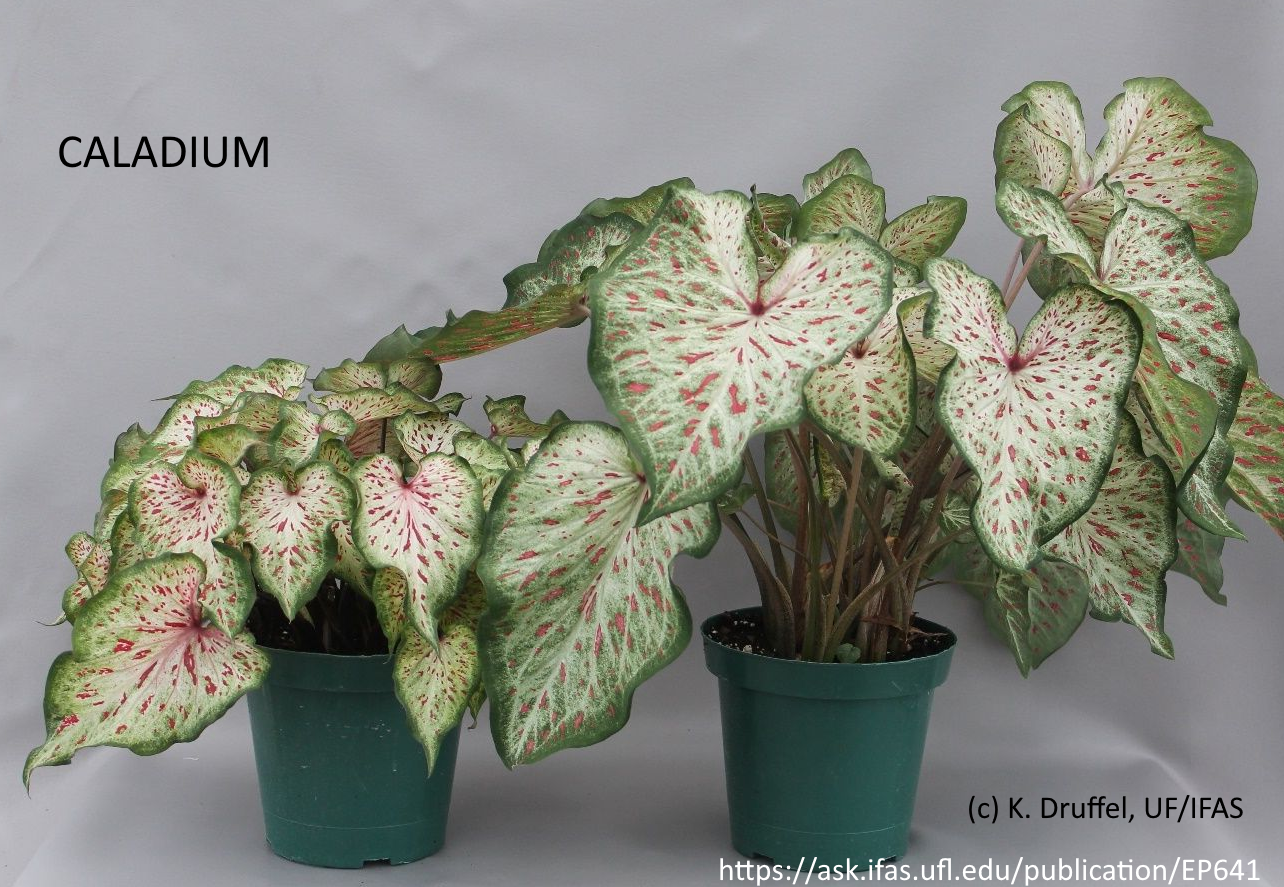
Caladium: a growing guide for colourful tropical leaves
Caladium: a living colour palette
Caladium is a tuberous aroid grown primarily for its foliage. Heart- or arrow-shaped leaves blend green, white, pink and red in an extraordinary range of patterns. Most plants sold as caladium descend from Caladium bicolor and horticultural selections. The species is native to tropical America, where it grows in warm, humid habitats.
In Belgium, caladium is chiefly an indoor plant. It can spend summer outdoors in a sheltered, frost-free spot away from harsh sun. Unlike colocasia, it often has lighter leaves on long stalks and naturally enters dormancy as days shorten.
Choosing a plant or tuber
Look for firm stems and leaves without soft patches. A tuber should feel firm, clean and free from rot. Large-leaved “fancy-leaved” types make a dramatic focal point, while narrower “strap-leaved” forms work beautifully in containers and shady borders. ‘White Queen’, ‘Red Flash’ and ‘Carolyn Whorton’ are well-known colourful choices.
The right growing conditions
Bright, filtered light
Place your caladium close to a bright window, using a sheer curtain if needed. Gentle morning sun may suit some cultivars, but direct midday sun can scorch the leaves. Outdoors, choose bright shade or dappled light.
Warmth, humidity and an airy mix
Growth is strongest above about 18 °C. Keep the plant away from cold draughts and bring it inside before cool autumn nights. Moderate to high humidity helps preserve crisp leaf edges; grouping plants, using a humidifier or a pebble tray can help. Never let the base of the pot stand in water.
Use a pot with drainage holes and a rich, open mix: houseplant compost with fine bark or coir and a little perlite is a useful combination. Plant a tuber with the buds facing upward and cover it lightly.
Watering, feeding and dormancy
From spring to late summer, water when the upper layer of compost begins to dry. Water thoroughly, allow excess water to drain, and empty the saucer. Saturated soil is the main cause of tuber rot. During active growth, a balanced liquid fertiliser used at the label dilution and at modest intervals is enough.
Yellowing leaves in autumn or winter may simply signal dormancy. Gradually reduce watering; once foliage has dried, keep the tuber dry, frost-free and moderately warm. Repot into fresh mix in spring and restart watering carefully when new buds appear.
Solving common problems
| Symptom | Likely cause | Helpful action |
|---|---|---|
| Yellow leaves and a soft base | Overwatering or poor drainage | Let the mix dry; check roots and repot if needed. |
| Brown, crisp margins | Dry air, heat or irregular watering | Make watering more consistent and raise ambient humidity. |
| Pale, small leaves | Too little light or weak feeding | Move to brighter filtered light; feed only in active growth. |
| Spreading spots or distorted leaves | Stress, pests or disease | Isolate, inspect leaf undersides and remove affected tissue with clean tools. |
Mealybugs and spider mites can occur in dry conditions. Regular inspection and gentle cleaning are the best first steps; use a product appropriate to the pest and follow its label.
Propagation, planting partners and safety
Divide a large tuber in spring, ensuring each section has at least one bud. Allow cut surfaces to dry briefly, then pot into barely moist mix. Caladium pairs well with ferns, fittonias and marantas, all of which enjoy soft light.
Caladium contains insoluble calcium oxalates. Sap may irritate skin, and ingestion is hazardous for cats, dogs and horses. Keep it out of reach of children and pets, wear gloves if your skin is sensitive, and seek veterinary advice promptly after suspected ingestion.