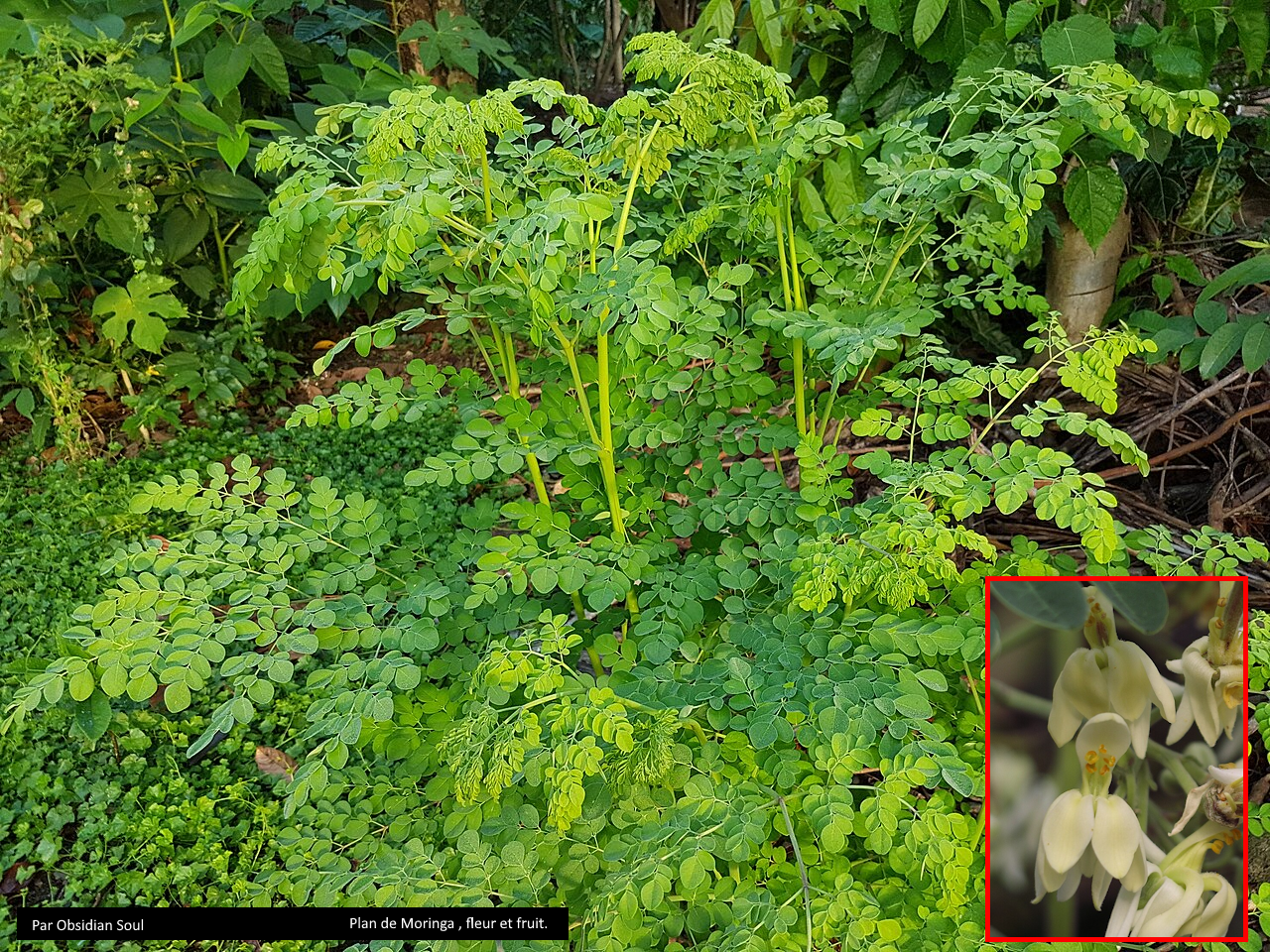
Moringa oleifera: getting to know a tree with many uses
Meta description: A botanical portrait of moringa: origins, leaves, flowers, pods, growing conditions and traditional uses.
Moringa oleifera, also known as moringa, ben oil tree or horseradish tree, is a small tropical tree in the Moringaceae family. Native to the Indian subcontinent, it is now grown throughout warm regions for its leaves, young pods and seeds. Its “miracle tree” nickname mainly reflects its remarkable botanical and culinary versatility; it is best appreciated for what it actually is rather than as a universal promise.
How to recognise moringa
Moringa is fast-growing and is often kept between 2 and 4 metres tall through pruning when grown for leaves. Its light, graceful foliage consists of many small oval leaflets. Creamy-white, lightly scented flowers grow in airy clusters. They develop into long, slender pods — commonly called drumsticks — containing angular seeds with three papery wings.
A plant that loves sun and warmth
Moringa thrives in full sun, warmth and very free-draining soil. Light sandy or loamy ground suits it well; standing water and prolonged cold do not. In Belgium, growing it in a pot, greenhouse or very bright conservatory is the most realistic option. Take it outdoors only in reliably warm weather and bring it in before autumn.
Choose a deep pot with drainage holes and a substrate that sheds excess water. Water moderately, allowing the surface to dry slightly between waterings. Regular pruning promotes branching and keeps the tree at a manageable height.
Leaves, flowers, pods and seeds
Where it has traditionally been cultivated, young leaves and immature pods are used in soups, sauces and vegetable dishes. Dried, ground leaves can also be used as a food ingredient. The seeds are valued in particular for ben oil, which is rich in oleic acid and known for its stability.
Some care is needed, however: the pungent roots contain compounds that make them unsuitable for everyday consumption. And traditional seed uses for water clarification never replace proper drinking-water treatment and testing.
A botanical curiosity and a food ingredient to explore
Moringa’s composition varies with origin, soil, harvest and drying method. In the kitchen, think of it as one plant ingredient among many in a varied diet. For a closer look at leaf-based supplements and their role in a wellbeing routine, visit Genesora.
Discover: WeightWorld Organic Moringa 1,650 mg on Amazon, made with leaf powder in vegetable capsules.
Food supplements do not replace a varied diet. Ask a health professional for advice during pregnancy, breastfeeding, medical treatment or chronic illness. Amazon link may be affiliated.