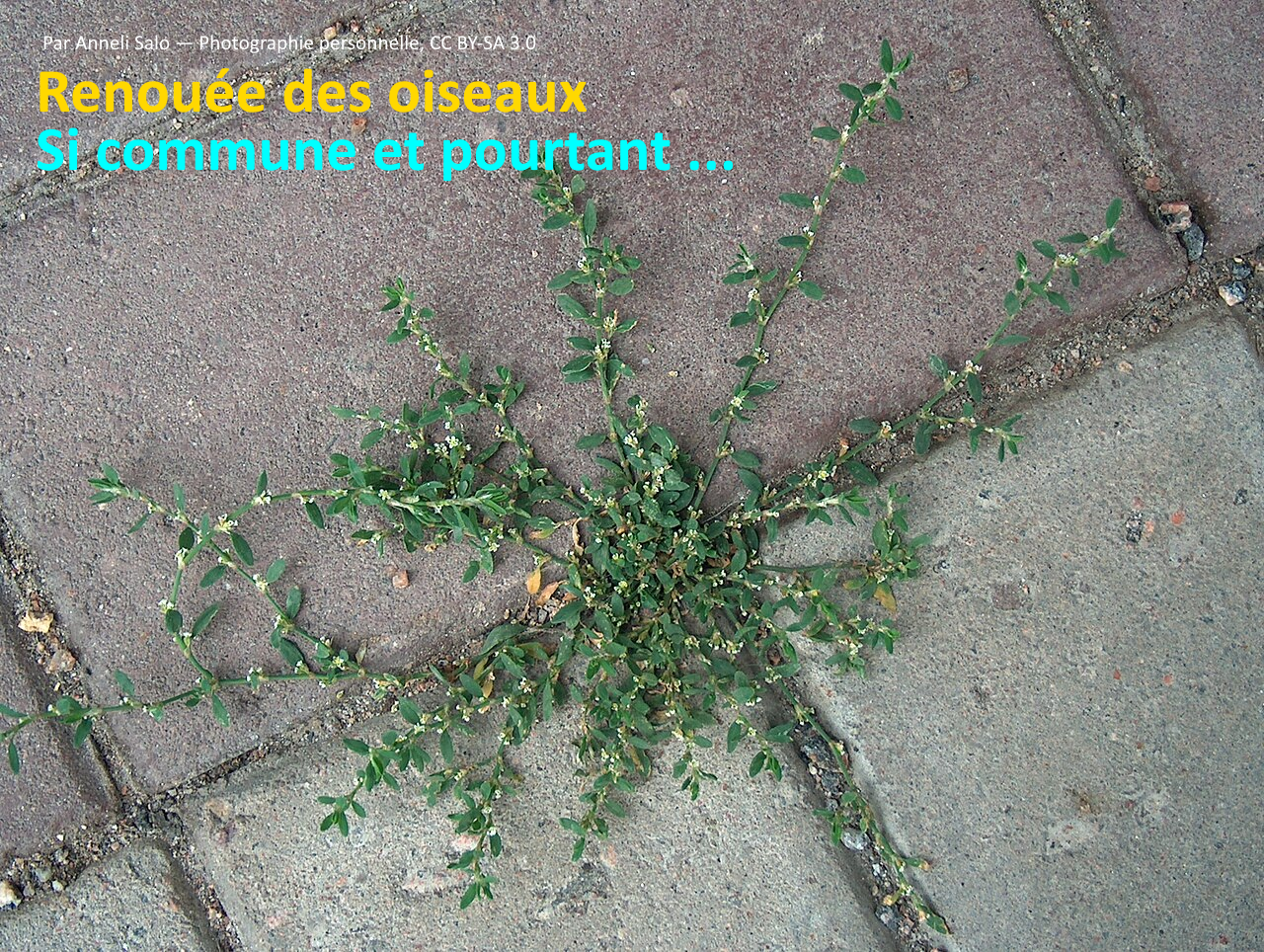
Knotgrass: how to recognise this resilient wild plant
A familiar plant of paths
Knotgrass (Polygonum aviculare L.) grows close to the ground on paths, pavements and compacted soil. Often dismissed as a weed, this annual member of the Polygonaceae family is native to Belgium and remarkably tolerant of trampling and dry conditions.
Identification points
Look for branched stems that spread along the ground, small alternate oval-to-lance-shaped leaves, and tiny white or pinkish flowers in the leaf axils. A small papery sheath around each stem joint—the ochrea—is a useful Polygonaceae clue. Several knotweeds look alike, so do not consume a wild plant without certain identification.
Ecology in the garden
Knotgrass thrives where few plants do: dry, stony, poor or compacted soil. Its presence may indicate compacted ground. Observe it before acting: in a path it is part of spontaneous urban flora; in a vegetable bed it can compete with seedlings. Early hand weeding and mulch are usually enough where it is unwanted.
Traditional use, carefully framed
The flowering aerial parts have a long history in herbal preparations and contain compounds such as tannins and flavonoids. The European Medicines Agency recognises traditional uses of specific knotgrass preparations for minor urinary complaints, minor mouth or throat inflammation, and some minor respiratory complaints.
Traditional use is not proof that the plant treats infection, kidney stones or chronic disease. Clinical evidence is limited. Seek medical advice for severe or persistent symptoms, fever, blood in urine, pregnancy, or if you take medicines. The EU monograph does not recommend use in children under 12 because of insufficient data.
Harvest with care
Never harvest without certain identification. Avoid roadsides, sprayed ground, pet-frequented places and polluted sites. For herbal use, prefer clearly labelled products. The affiliate link on this page is commercial; always read the product label and do not treat it as medical advice.